
Tolka
What if you could read as fast as you can think?
Tolka is a speed-reading app for iOS, iPad and Mac. Built on 40 years of reading science, we seek to empower busy professionals, academics, the neurodiverse and mind-tuners.
How it works
One word at a time.
Most of the time spent "reading" isn't actually reading, it's your eyes scanning across the lines, refocusing on new words, jumping ahead to sentence breaks, and backtracking. This part slows your reading down, and many people will become bored or lose concentration while reading because their eyes can not feed their brain information fast enough. RSVP removes the eye-work from reading by presenting the text one word at a time at a pace comfortable to you. Your eyes don't move. Your attention doesn't wander. You just read.
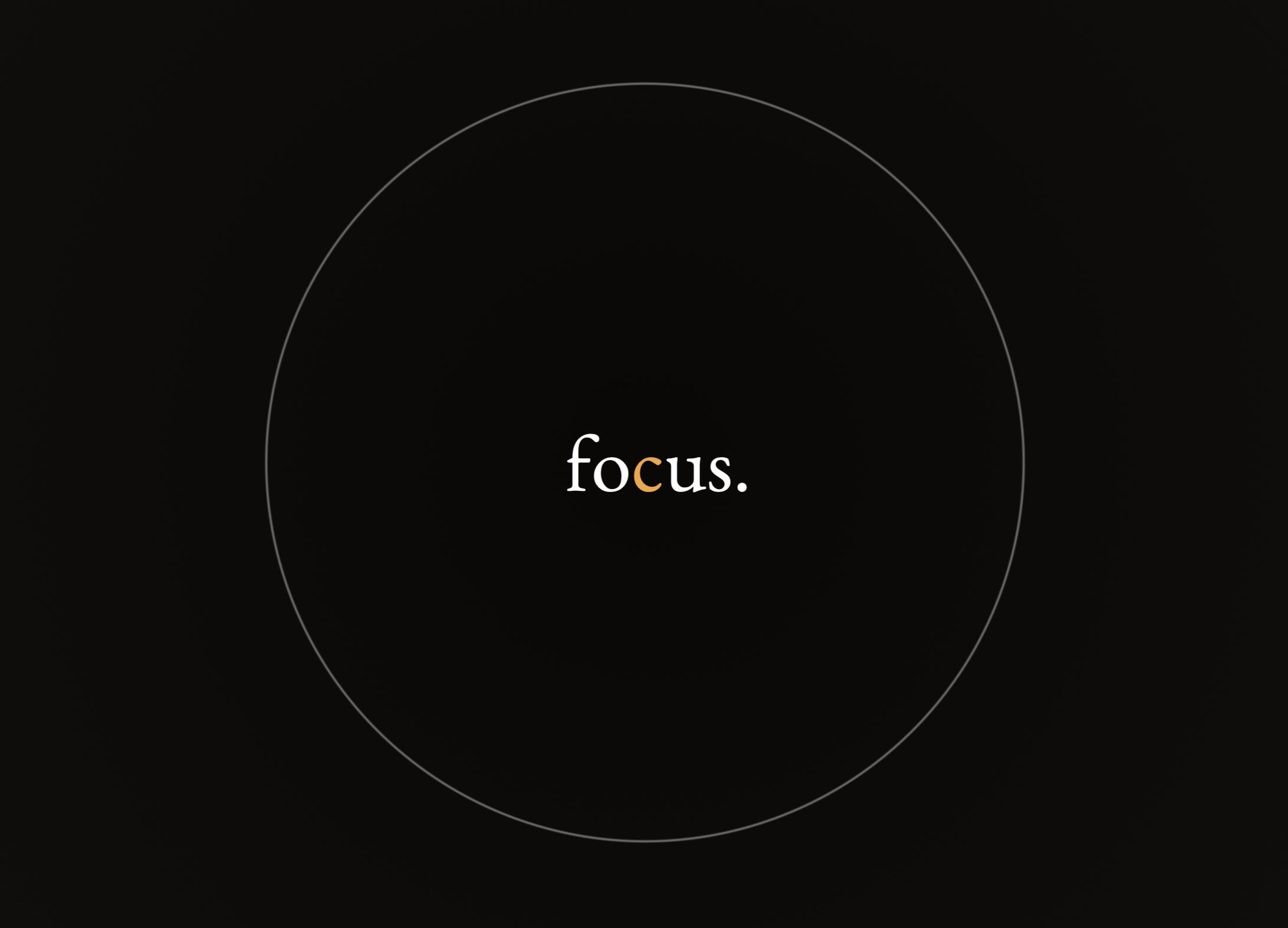
Focus.
Tolka highlights a single letter near the start of each word to anchor your gaze there automatically, allowing your peripheral gaze to absorb the rest of the word without the need for your eyes to move. The choice of letter is slightly to the left, based on resarch into the Optimal Viewing Position, a property of human vision studied since the 1980s. The result is faster recognition with less effort.
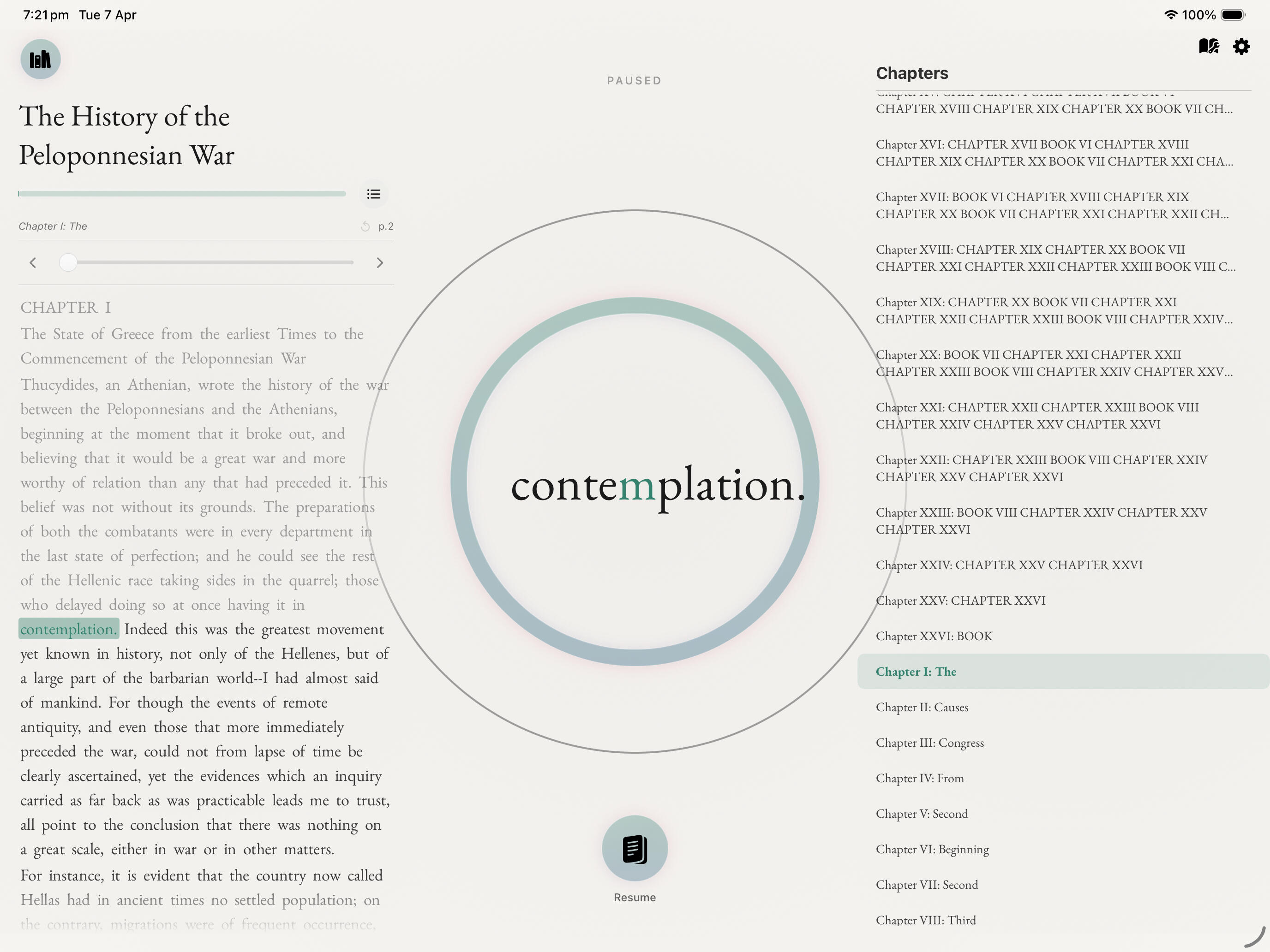
Timing is everything.
Words aren't all the same. "I" and "photosynthesis" shouldn't get equal screen time. Tolka's timing system gives longer words more time, holds on punctuation, and pauses naturally at sentence boundaries. All these properties have been tuned to aid smooth comprehension but are also user-configurable.
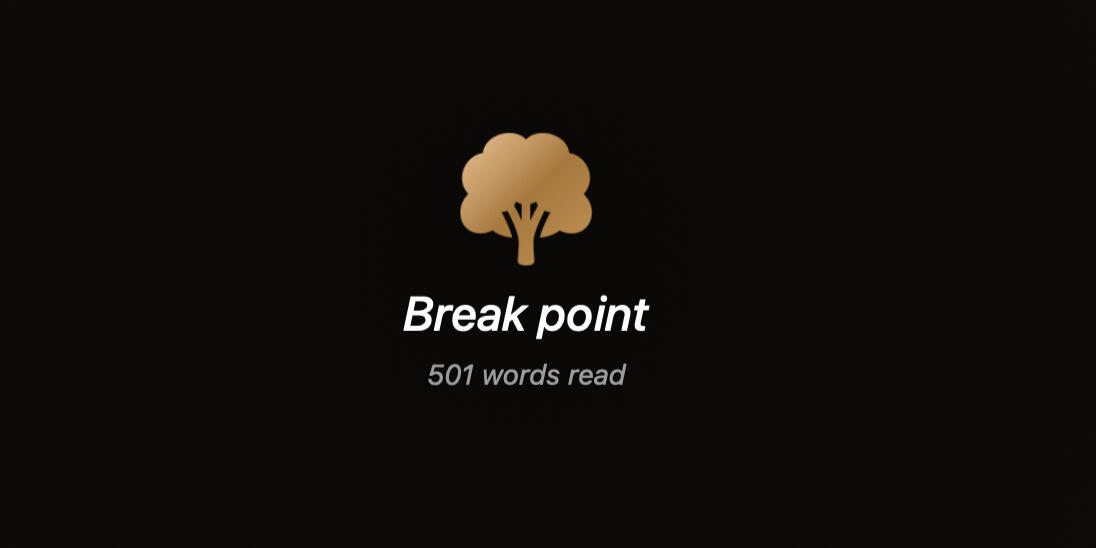
Break points.
An interesting side-effect of increasing the pace of data input is that you can quickly fill up your short-term or working memory. Tolka lets you set automatic break points every N words, at chapter ends, or at paragraph intervals. When a break arrives, you stop, breathe, and continue. Giving yourself a moment to react to the text emotionally or intellectually allows your brain to move the information from your working memory to your long-term memory.
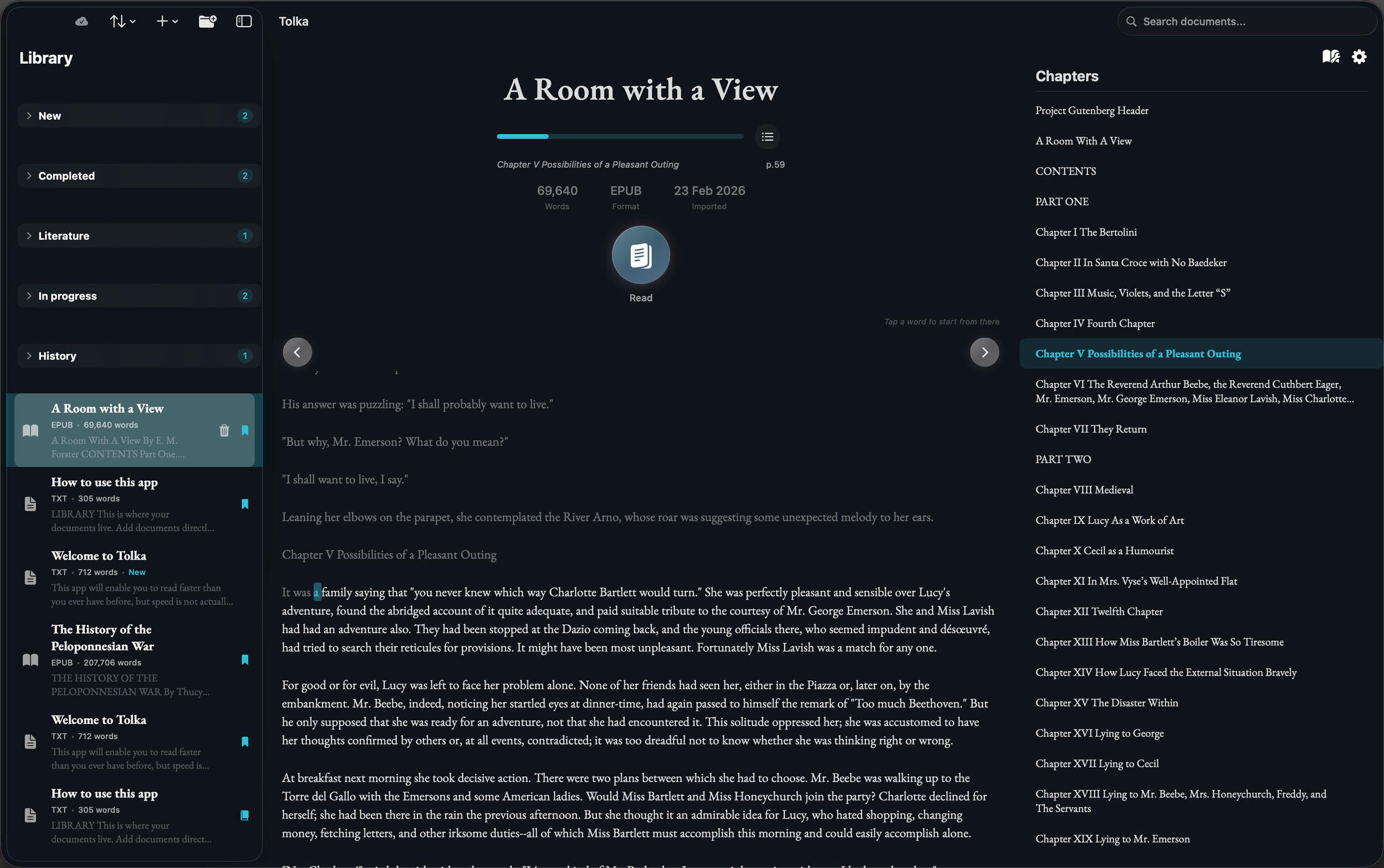
More input.
Curate and organise your Library by importing pdf, epub, doc, txt or any other form of text document. You can also paste a URL or share directly from your web browser. We also have a direct interface to the fabulous Project Gutenberg, where you can browse and download all known literature in the public domain.
Research
Tolka's algorithm is built on published cognitive science research, these are the papers it draws from. Download the pdfs and read them in Tolka!
O'Regan, Lévy-Schoen, Pynte & Brugaillère (1984)
Convenient fixation location within isolated words of different length and structure
The paper that identified the Optimal Viewing Position — the finding that word recognition is fastest when the eye lands slightly left of centre. The foundational basis for Tolka's focus letter placement.
→ Read the paper
Brysbaert & Nazir (2005)
Visual constraints in written word recognition: evidence from the optimal viewing-position effect
A comprehensive review of OVP research across word lengths and reading conditions. Informed Tolka's choice of a fixed 35% focal position rather than a variable formula.
→ Read the paper
Rayner (1998)
Eye movements in reading and information processing: 20 years of research
The definitive reference work on how the eye actually moves during reading — saccades, fixations, regressions. The foundational model for understanding why eliminating eye movement changes the experience.
→ Read the paper
Benedetto, Carbone, Pedrotti et al. (2015)
E-readers and visual fatigue
A controlled study comparing RSVP reading with traditional reading on comprehension and fatigue. One of the most cited papers on the real-world effects of the method.
→ Read the paper
Schotter, Tran & Rayner (2014)
Don't believe what you read (only once): Comprehension Is Supported by Regressions During Reading
Research into the role of regressions — backward eye movements — in comprehension. Relevant to understanding what RSVP trades off and how Tolka's Prose Context View addresses it.
→ Read the paper
Di Nocera, Camilli & Terenzi (2007)
A Random Glance at the Flight Deck: Pilots' Scanning Strategies and the Real-Time Assessment of Mental Workload
Research on attention, information pacing, and cognitive load under timed visual presentation. Informed Tolka's guidance on upper WPM limits and default speed settings.
→ Read the paper
Contact
This app was made by Wundercog.